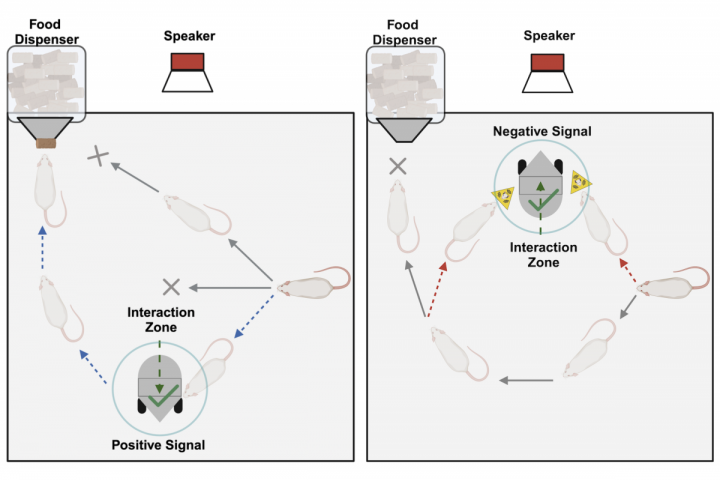
We have finally published our long-term study on a novel animal–robot interaction paradigm that enables bidirectional learning between rats and robots. As Steinbeck stated, “If you understand each other, you will be kind to each other. Knowing a man well never leads to hate and almost always leads to love.” This idea appears to extend to animals and robots as well. In both our in silico and in vivo tests, rat-robot pairs that successfully interpreted each other’s signals adjusted their actions to maximize rewards, fostering mutual learning.
13 Jan 2025
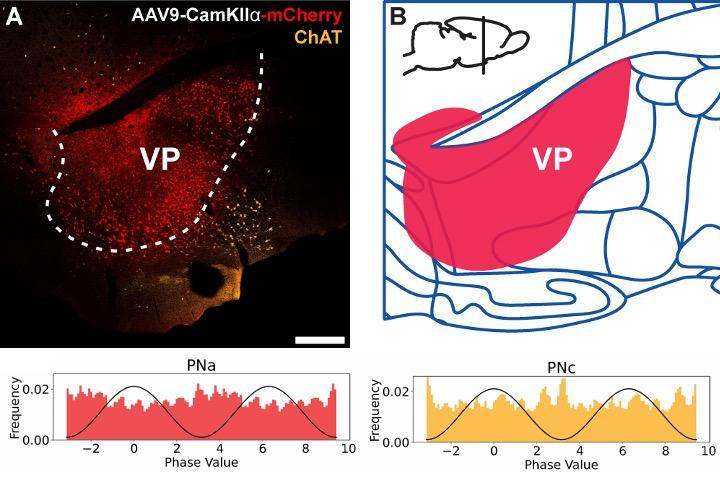
We have published our long-term study on ventral pallidum-amygdala innervation in collaboration with Dr. Nair’s Neural Engineering Laboratory at the University of Missouri. By combining anatomical and computational approaches, we explored whether basal forebrain (BF) projections to the amygdaloid complex modulate local network activity in a manner analogous to the well-characterized septo-hippocampal pathway.
26 Nov 2024
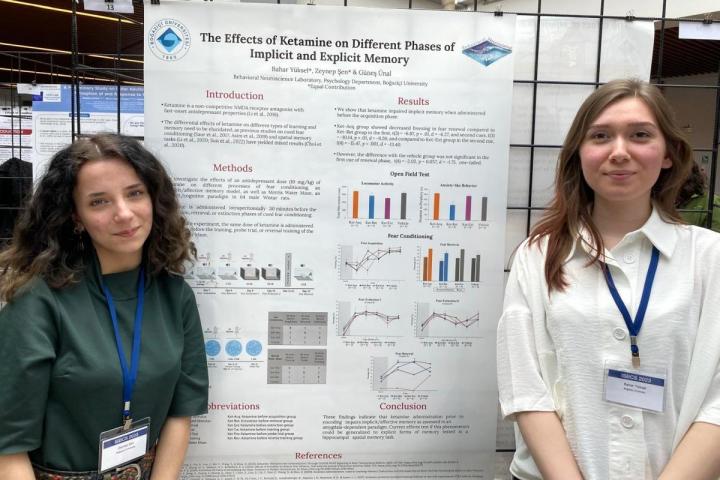
In this study, we examined the impact of an antidepressant dose of ketamine on the encoding, retrieval, and modulation of fear and spatial memory in adult Wistar rats. Ketamine (10 mg/kg, IP) was administered during specific phases of Pavlovian fear conditioning (implicit memory) and the Morris Water Maze (MWM; explicit memory). While it partially impaired fear extinction when administered before acquisition or retrieval, it enhanced memory modulation and improved performance during MWM reversal training.
30 Aug 2024
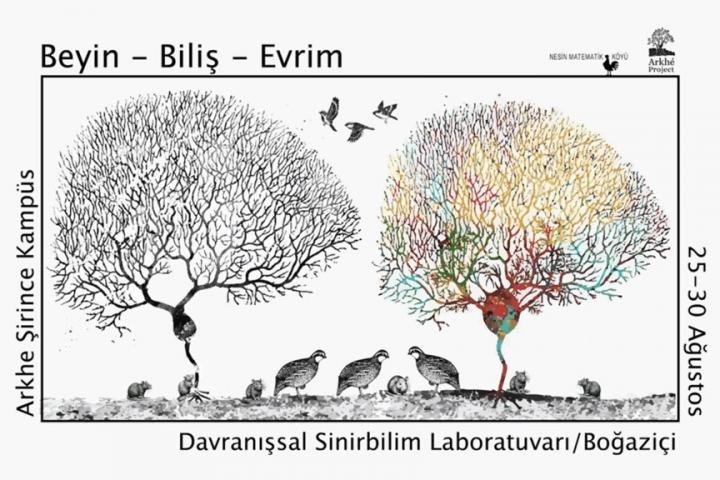
We successfully completed the Arkhé training on "Brain, Cognition, and Evolution" from August 25–30. The lectures were accompanied by stimulating discussions and engaging interactions. You can find the program details here:
https://archeprojesi.com/kamp/beyin-bilis-ve-evrim-brain-cognition-and-e...
29 Jun 2024
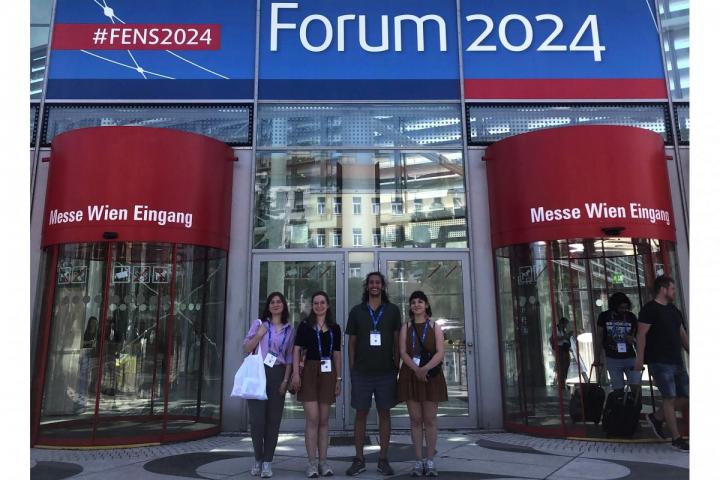
We attended the FENS Forum 2024 in the beautiful city of Vienna! Defne and Sinem presented their work on the "fiber density analysis of the catecholaminergic projections in the Japanese quail" (click for abstract), while Bahar demonstrated that "ketamine exerts differential effects on implicit and explicit memory processes in adult Wistar rats" (click for abstract).
22 May 2024
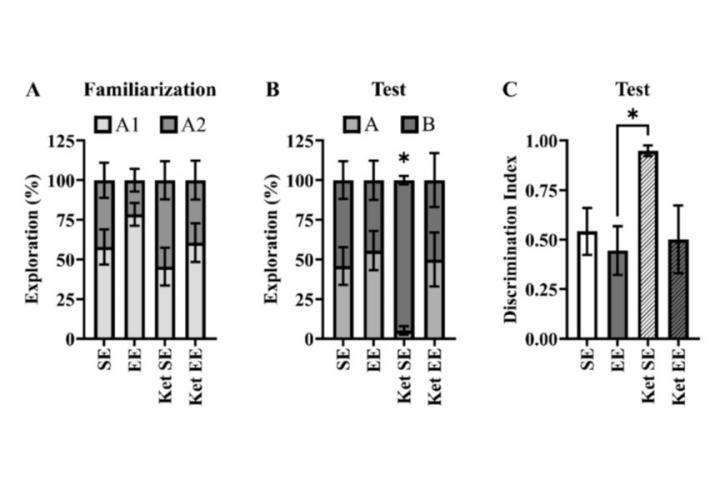
Ketamine is a rapid-acting antidepressant associated with various cognitive side effects. To mitigate these side
effects while enhancing efficacy, it can be co-administered with other antidepressants. In this study, we adopted a
similar strategy by combining ketamine with environmental enrichment, a potent sensory-motor paradigm, in
adult rats, and observed that combining environmental enrichment with ketamine led to a synergistic antidepressant effect!
11 Mar 2024
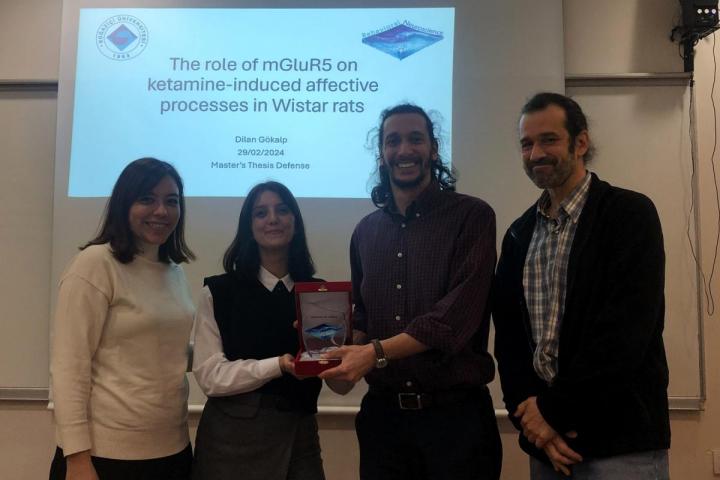
Our dedicated Research Assistant, Dilan Gökalp, successfully defended her thesis on the same day we received the exciting news of our article's acceptance: The Role of mGluR5 on the Therapeutic Effects of Ketamine in Wistar Rats in Psychopharmacology: https://link.springer.com/content/pdf/10.1007/s00213-024-06571-3.pdf
28 Feb 2024
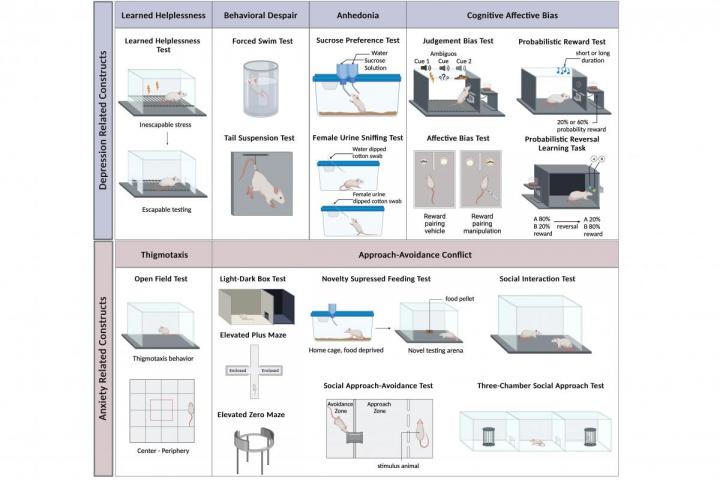
In this review, we outline the laboratory procedures employed to evaluate depressive- and anxiety-like behaviors in rats and mice. These assessments encompass constructs dependent on stress-induced responses, such as behavioral despair, as well as those arising from non-aversive training, like cognitive bias. We detail the specific behavioral tests utilized for evaluating these constructs and examine criticisms regarding their theoretical underpinnings.
12 Feb 2024
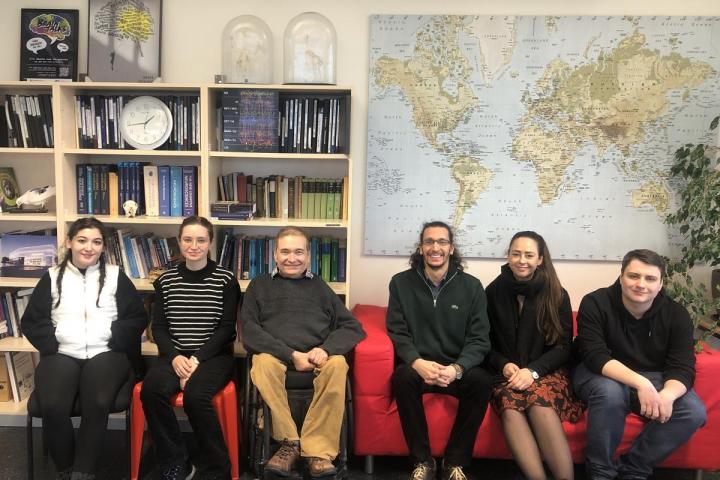
Defne and Sinem conducted their initial research visit to Ruhr-Universität Bochum as part of our collaboration with Dr. Noemi Rook, Prof. Dr. Dr. h.c. Onur Güntürkün, and Kevin Haselhuhn to study the limbic system of the Japanese quail. This collaboration is jointly funded by the Scientific and Technological Research Institution of Turkey (TÜBİTAK) and the German Academic Exchange Service (DAAD).
15 Nov 2023
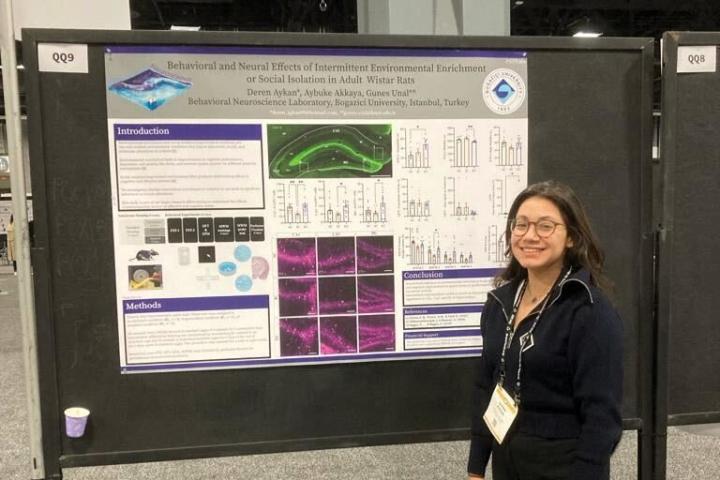
Deren presented our work on the behavioral and neural effects of intermittent environmental enrichment at the Neuroscience 2023 (D.C., USA). This particular experiment, carried out by Aybüke and Deren, is part of our ongoing efforts to comprehend the intricate behavioral and circuit-level effects of environmental enrichment in rats.